


Apr 23,2026 / CABINETS
How to Choose the Right Modular Kitchen for Your Indian Home: A Step-by-Step Guide
So, you have just got the keys to your new flat. You have finally decided to stop tolerating that old, chipped slab kitchen and do something about it. Either way, you are now staring at a kitchen space and wondering how on earth to turn it into something you will actually enjoy cooking in.
The modular kitchen market in India is massive — and frankly, a little overwhelming. There are brand finishes to choose from layouts to consider, materials to compare, and designers all telling you slightly different things. It is easy to end up spending more than you planned on a kitchen that does not quite work the way you hoped.
This guide will help you with your kitchen. If you follow these steps, you will know what you want for your kitchen and what to look out for before you go to a showroom to look at kitchens.
Step 1: Measure Your Kitchen Space Accurately
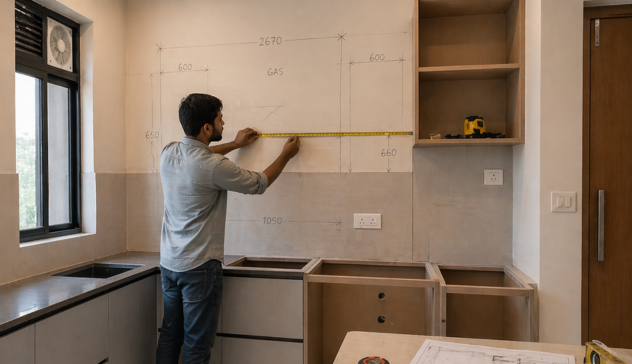
This sounds obvious. But you would be surprised how many people walk into a modular kitchen showroom with only a rough idea of their kitchen dimensions — and then spend weeks in back-and-forth with the designer because the initial quote was built on wrong numbers.
Before anything else, measure your kitchen carefully. You need:
- Overall length and width of the kitchen space
- Position of all doors and windows — including which way doors swing
- Location of existing plumbing points — sink, drain, and water inlet
- Location of the cooking gas connection point
- Position of electrical points — switches, plug points, and the chimney connection
- Height from floor to ceiling, and the height of any beam or slab drop
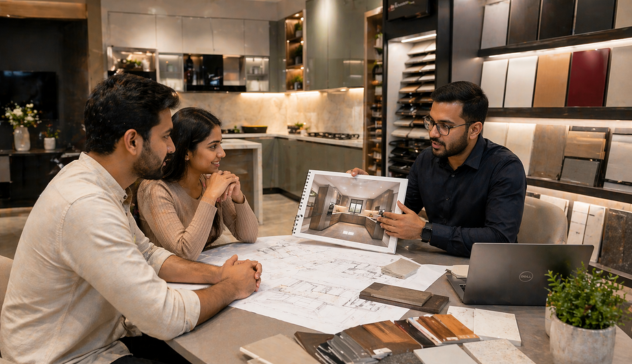
Write all of these things down and make a simple drawing to bring with you when you visit showrooms. If a designer does not ask for these measurements before they give you a quote they are not taking it seriously. They just want to make a sale. Modular kitchen designers should ask for these things to give you a quote.
Step 2: Decide on Your Kitchen Layout
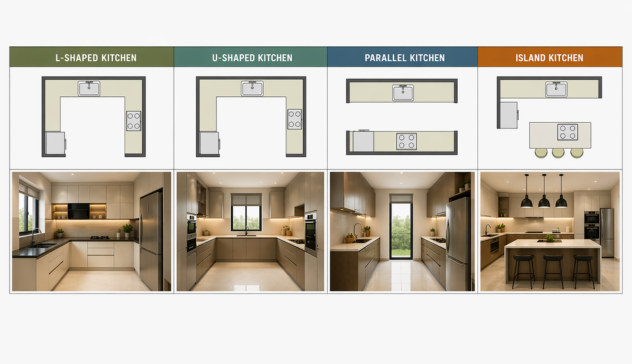
The layout of a kitchen is really important because it affects how you walk around the kitchen, how much space you have to store things and how comfortable it is when two people are cooking together.
|
Layout |
Best For |
Min. Space |
Main Advantage |
|
Straight / One- Wall |
Small kitchens, studio flats |
6 ft length |
Maximum open floor space, simple and clean |
|
L-Shaped |
Most 2BHK and 3BHK kitchens |
8 x 8 ft |
Good work triangle, works in corners |
|
Parallel / U- Parallel |
Narrow kitchens |
7 ft width |
Maximum storage, very efficient workflow |
|
U-Shaped |
Large kitchens, heavy cooking |
10 x 10 ft |
Most storage, best for two cooks |
|
Island Kitchen |
Open-plan homes, large spaces |
12+ ft width |
Extra workspace + seating, great social layout |
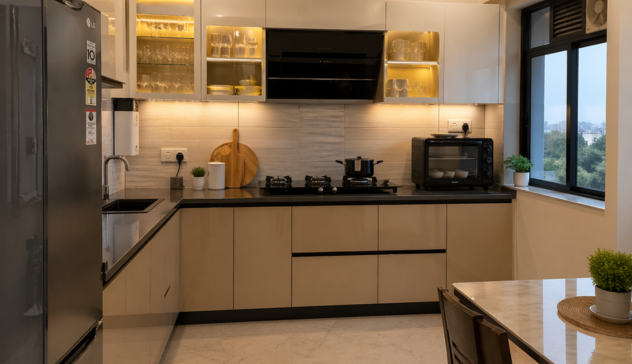
For most apartments in India, like 2BHK or 3BHK, the L-shaped layout is the best choice. It fits kitchens, makes a natural work triangle between the sink, hob, and refrigerator, and gives you good storage without taking up too much floor space.
Quick Tip: If your kitchen is very narrow, then 7 feet wide, do not use a U-shaped layout. Having two counters opposite each other in a kitchen makes it feel small and hard to work in.
Step 3: Understand the Materials — This Is Where Quality Lives
This is the step that most homeowners miss. It is the one that comes back to haunt them three years later when the shutters start peeling, or the kitchen cabinet box swells under the sink.
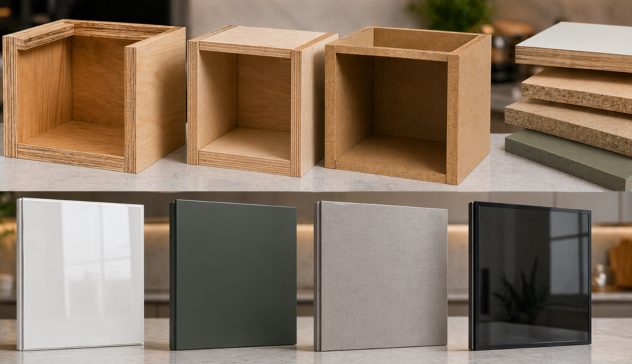
A modular kitchen has two parts: the kitchen cabinet box and the shutter. These are made from different materials, and the quality of each determines how long your kitchen will last.
The Kitchen Cabinet Box: What It Is Made From
- BWP or Marine Plywood is the option. It is boiling water proof and can handle moisture, heat and humidity. It lasts for 15 to 20 years or more. It is more expensive. It is worth it for the cabinets near the sink and the stove.
- Commercial Plywood is an option. It works fine for the upper cabinets that are away from moisture. However, it is not suitable for the cabinet near the sink or the cooking area.
- HDF or Particle Board or MDF are not options for the kitchen cabinet box. They are commonly used in budget kitchens. They are affordable. They swell when they get wet, especially under the sink. They usually fail first in a kitchen.
You should ask any kitchen brand what the kitchen cabinet box is made from. If they say it is HDF or particle board, you should ask them why. Compare it to a plywood option before you decide to buy.
The Shutter: The Part You See Every Day
- Acrylic has a high-gloss finish. Looks very good. However, it scratches easily. Shows fingerprints all the time. It is best for kitchens that are not used much or when looks are the important thing.
- Laminate is practical and durable. It comes in many colors and textures. It can handle oil, heat, and daily use well. Brands like Merino, Greenlam, and Royale Touche are options. It is best for Indian cooking.
- Membrane or PVC is a wrapped finish that's smooth and easy to clean. It is a budget option compared to acrylic. It can handle heat better than acrylic.
- Glass or Lacquered Glass is used for the cabinets or for decorative shutters. It gives a premium feel. However, it is more fragile than laminate or acrylic.
One thing to keep in mind is that for kitchens that are used a lot every day. This is most Indian kitchens. Laminate is the most practical option for the shutter. Acrylic looks good in the showroom. It needs a lot of upkeep in real life. Modular kitchen brands like Merino, Greenlam, and Royale Touche are options. Modular kitchens, with laminate shutters, are very durable.
If you want a deeper finish comparison before deciding, this guide on acrylic vs laminate for kitchen cabinets in India is useful.
Step 4: Plan Your Storage Before You Order
Most people are not happy with their modular kitchen because they do not have enough storage space. The kitchen looks really nice when you see the design. It seems like everything will fit in there. After six months, you are still struggling to find places to put all your things.
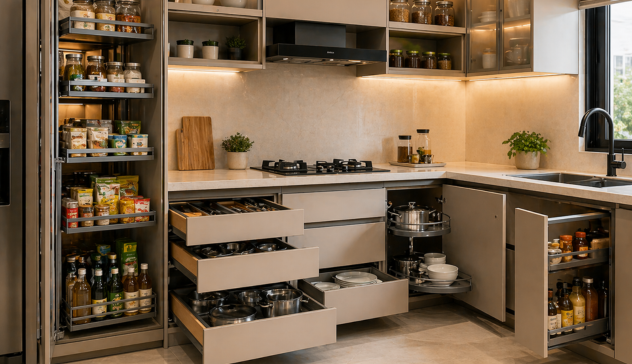
Before you finalize your kitchen design, you should make a list of all the things that you need to keep in your kitchen. This includes things like utensils, pressure cookers, kadais, spice boxes, containers for dal and rice dry goods cleaning supplies, small appliances, crockery, and water bottles. Then you should check if your kitchen layout actually has space for all of these things.
Here are some things that you should consider when designing your kitchen:
- Tall units or pantry cabinets are really important for storing goods, especially if you do not have a separate storage room.
- Deep drawers for base cabinets are much better than shelves because you can easily access your pots and pans.
- Pull-out bins under the sink are an idea because they keep your waste hidden and make the sink area cleaner.
- Corner solutions, like a Susan or a magic corner unit can turn a dead corner into a usable storage space.
- Wicker baskets or pull-out shelves for vegetables and onions are a must-have in a kitchen, but many standard designs do not include them.
- Overhead loft cabinets that go all the way to the ceiling are an idea because they make use of the space that would otherwise be wasted.
Step 5: Set a Realistic Budget — and Know What Affects It
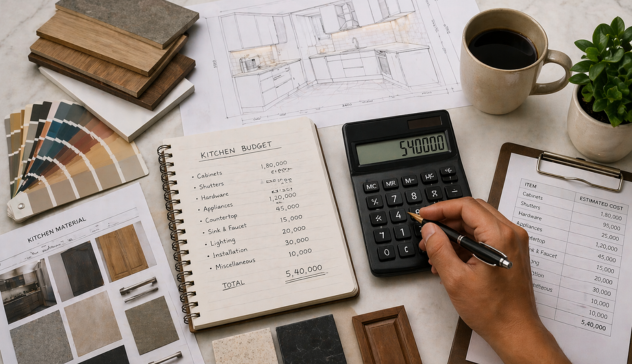
Modular kitchen pricing in India can be really confusing. The same kitchen can have different prices depending on the brand and the materials used. Also, what is included in the price can vary a lot.
Here is a rough guide to help you understand what you can get for amounts of money:
|
Budget Tier |
10 ft Kitchen Approx. |
What You Typically Get |
|
Entry Level |
₹80,000 – ₹1.2 lakh |
MDF/particle board carcass, basic laminate shutters, standard hinges. Limited storage options. |
|
Mid Range |
₹1.2 lakh – ₹2.5 lakh |
Commercial plywood carcass, quality laminate (Merino/Greenlam), soft-close hinges, basic pull- outs. |
|
Premium |
₹2.5 lakh – ₹5 lakh |
BWP plywood carcass, acrylic or premium laminate shutters, Hettich/Hafele hardware, full pull-out systems. |
|
Luxury / Branded |
₹5 lakh+ |
Full-height design, imported finishes, premium hardware, integrated appliances, designer layout. |
The important thing to remember is not to compare two prices without comparing the materials used. Modular kitchen pricing in India is confusing because of this. A kitchen that costs ₹1.5 lakh with a plywood carcass is better than a kitchen that costs ₹1.8 lakh with a particle board carcass. Always ask for a list of what you are getting. The type of carcass, the brand of shutters, the brand of hardware, and the type of countertop. Before comparing prices of modular kitchens in India.
Step 6: Choose the Right Countertop for Indian Cooking
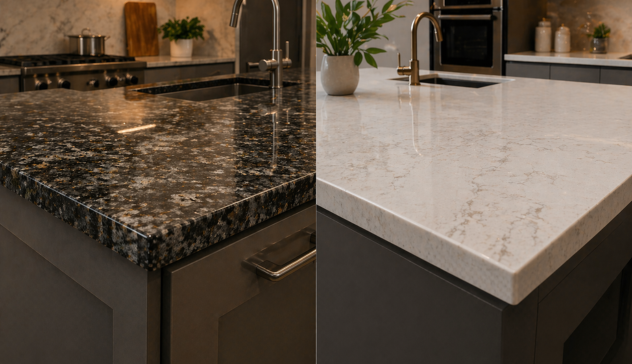
The countertop in an Indian kitchen takes a lot of abuse. Chopping, hot pots, spices, staining. If you choose the one it can be frustrating every day. Here are some common options:
- Granite: This is the popular choice for Indian kitchens. It is very durable, can handle heat, and is easy to clean. I need to seal it a year. The popular colors for granite are black, grey, and cream.
- Quartz: This is also known as engineered stone. It is not porous, so it does not need to be sealed, and it looks very uniform. It is great for kitchens. However, it is not as good with heat as granite, so I need to use a trivet. Some popular brands for quartz are Kajaria, Nitco, and Silestone.
- Solid surface / Corian: This has a seamless look and is easy to fix if it gets scratched. However, it is not as good with heat as granite. It is good for areas that are not used much, like the breakfast counter.
If you are deciding between the two main options, this comparison of quartz vs granite countertops for your kitchen can help.
Step 7: Evaluate the Brand and Support
Choosing a modular kitchen brand is as important as choosing the right materials. A kitchen from a known brand with good support will cost more. The warranty, service network, and quality are better than a local manufacturer with no accountability.
Some questions to ask a brand or contractor before signing:
- What material is the carcass made of? BWP plywood, commercial plywood, or HDF?
- Which hardware brand do you use? Hettich, Hafele, Blum, or regular fittings?
- What material is the shutter made of, and which laminate brand do you use?
- What kind of warranty do you have? What does it cover?
- Do you have a service team that can come for issues after installation?
- Can I see a completed kitchen installation, not a showroom that I can visit?
- What is the payment schedule? How much do I pay upfront on delivery and on completion?
Never pay more than 30 to 40 percent upfront. Reputable brands and contractors do not ask for full payment before work begins.
Step 8: Plan for the Appliances Before the Design Is Finalised
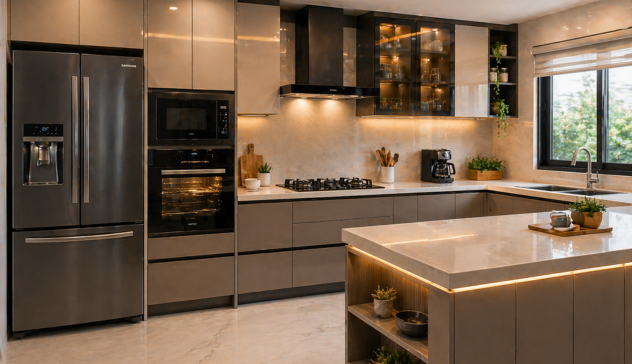
You need to think about the appliances you will use in your kitchen before you finalize the design. This includes things like chimneys, hobs, ovens, microwaves, dishwashers and refrigerators.
- The chimney needs to be the size for the hob. A 60cm chimney works well for Indian kitchens with a 4-burner hob.
- If you want a built-in oven or microwave, you need to know the dimensions before you design the unit or housing cabinet.
- Where you put the refrigerator affects how easy it is to move around the kitchen. Make sure you know the size of the refrigerator and which way the door opens. You do not want the door to open into a wall or cabinet.
- If you want a dishwasher, you need to plan for the plumbing connection before you tile the kitchen. It is hard to add this without breaking the tiles.
Quick Tip: At least choose your appliances before you finalize the kitchen design. The chimney, hob and fridge are especially important because their sizes affect the cabinet dimensions.
Choosing the modular kitchen is not just about picking the one that looks the best. It is about understanding your space, your cooking habits, your storage needs, and your budget. Then you can make decisions based on the quality of the materials, not how it looks.
Measure your kitchen first. Decide on the layout. Understand what the carcass is made of. Plan your storage before you approve the design. Get the appliance specs confirmed. Ask all your questions in writing. Do not pay everything up front.
A planned modular kitchen, with good materials and hardware, will last for 15 years or more. If you rush into a decision based on a showroom and a low quote, you will be frustrated in no time.
Take your time when planning your kitchen. The kitchen you plan carefully is the one you will actually enjoy using.
Before you visit a kitchen showroom, write down your kitchen measurements, your layout preference and the three questions you most want answered about materials. This will help you have a conversation and get a more honest quote.
For expert support, layout guidance, and modular kitchen solutions, you can also explore Express Kitchens India.
FAQ’s
1. What is the best modular kitchen design for a small flat?
For small kitchens, L-shaped or straight layouts work best. They maximize space, keep movement easy, and allow enough storage without making the kitchen feel cramped.
2. Which material is best for modular kitchen cabinets?
BWP or marine plywood is considered the best material for cabinet boxes because it resists moisture and lasts longer. For shutters, laminate is the most practical option for daily cooking due to its durability and low maintenance.
3. How much does a modular kitchen cost in 2026?
A modular kitchen typically ranges from ₹80,000 for basic setups to ₹5 lakh or more for premium designs. The final cost depends on materials, hardware, finishes, and storage accessories.
4. Which finish is better for modular kitchen: laminate or acrylic?
Laminate is better for daily-use kitchens because it handles heat, scratches, and cleaning easily. Acrylic offers a high-gloss, premium look but requires more maintenance and is prone to visible scratches.
5. How do I choose the right modular kitchen layout?
Start by measuring your kitchen space and understanding your cooking habits. Then choose a layout like L-shaped, parallel, or U-shaped based on available space and workflow between sink, stove, and refrigerator.