


Jan 15,2026 / CABINETS
How To Choose The Right Modular Kitchen For Your Home
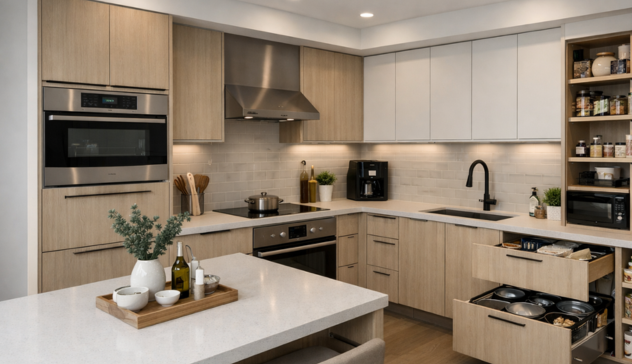
Good modular kitchens are at their best when they make every inch count. Even with a small space to work with, a well-thought-out layout can still give the room a feeling of breathability. Built-in appliances make a huge difference by freeing up counter space and keeping the area looking tidy as a result.
When it comes to cost planning, you need to think beyond the initial quote. That high upfront cost on materials like quartz or engineered stone might seem like a rip-off, but they can end up being a better value over the long haul because they tend to last 10 years plus with barely a scratch.
The kind of storage you go with is just as important as the finishes. Corner carousels, pull-out trays, and deep drawers are all game changers when it comes to being able to get to the things you need when you need them. Plus, they help you cook with better posture, which is a win-win in my book.
When you bring together a kitchen design that looks good, works well, and should last, it makes all the sense in the world.
Why Smart Planning Matters Before Choosing a Modular Kitchen
Planning the Difference between a Kitchen You Love and One That Gets on Your Nerves
There are lots of people out there who pick out their kitchen's colors and door style first, only to discover that the actual layout just doesn't work with how they use their kitchen.
When planning is hasty, the space can end up being cramped, with work zones that are a pain to navigate and storage that's woefully inadequate. And issues like drawers that keep getting in the way of the handle or having to constantly bend over to reach something - you won't think of these as you're browsing showrooms, but you'll be cursing them every time you try to cook in that kitchen.
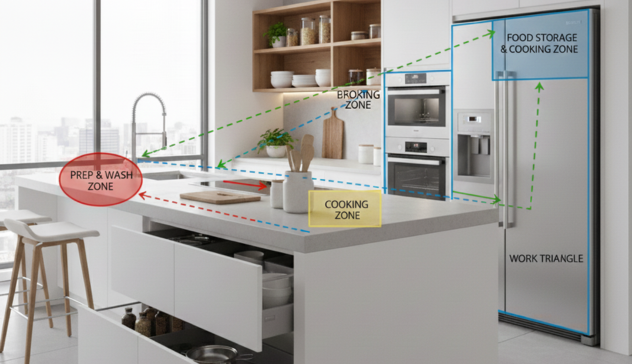
Good planning starts with getting a handle on your routine - if you're a regular cook, need more space to stash your food and cookware, or have two cooks trying to work in there at the same time, that kitchen needs to be laid out and stocked to suit.
Planning is also a good way to save your wallet. Having a clear idea of what you want and a solid plan in place means you can avoid mid-project changes - and that means you won't end up paying twice for the same thing. In the end, a little foresight can give you a kitchen that just feels like "home", a space that works for you and doesn't constantly get in your way.
Choosing Durable Cabinet Design for Modular Kitchens
Cabinets in a modular kitchen can really take a beating, so what they're made of really does matter. Built to last, they need to withstand all the use they'll get, and Engineered wood like MDF is often used in modular units because it's got a smooth surface and a density that's nice and even. If your kitchen is one of those places that gets all humid, then moisture-resistant MDF is probably a better bet.
Solid wood options like teak and maple are also pretty popular, especially if you're aiming for a more classic look. Over time, a lot of hardwoods will stay stable and cope with all that daily use if you give them a good seal and take care of them.
Stainless steel cabinets are a good option for areas that get a lot of moisture, such as around your sink or on a kitchen island. They don't rust and don't attract pests, which can be a real bonus in a lot of homes.
Sometimes, laminates are a bit of a practical choice for modular kitchens. High-pressure laminates with scratch-resistant and antimicrobial surfaces make them a lot easier to keep clean and with regular use they can last a good while longer.
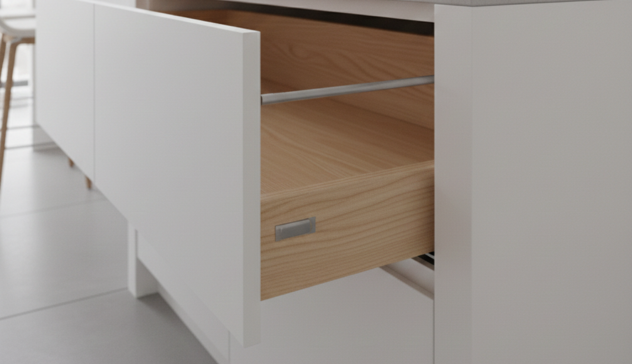
But how well a cabinet is built counts just as much as what it's built out of. Soft-close hardware with bits that are corrosion-resistant also helps cut down on wear and keep doors and drawers running smoothly for longer.
When you put all the different bits of a cabinet together - how it's made, the joinery, the hardware and the finish - it's a lot easier to pick out some modular units that are going to handle the heat, humidity and all the usual day-to-day use without losing any of their looks.
Selecting Ideal Countertop Materials for Function and Style
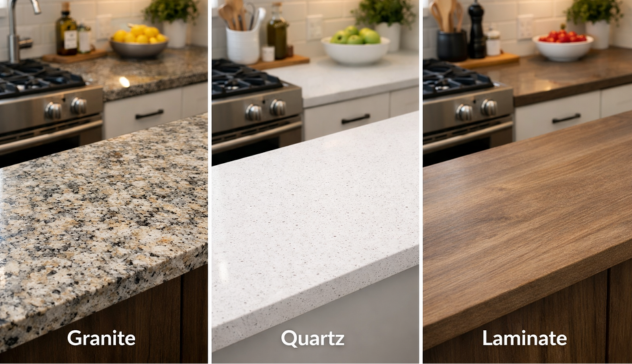
Countertops have a tough job - they've got to withstand heat, spills, and all the daily wear and tear. Granite is a clear winner here - it's got natural strength and heat resistance in spades, and every single slab has its own unique pattern. If you're looking for a countertop that'll last you a lifetime, granite is a great bet.
You might be surprised by quartz, though - it's got a super uniform look because it's made in a factory. That's a plus, because it resists stains like a champ and makes cleaning up a breeze. But some people get nervous when they hear that quartz uses resin as a binder - so if eco-friendliness is a top priority for you, this might be worth thinking twice about.
Laminate is another budget-friendly option that's got a lot going for it - it's super affordable, and it comes in a whole bunch of different colors and patterns. Modern printing has gotten to the point where it can even mimic the look of real stone or wood (pretty convincingly, at that). The catch? Laminate just isn't going to last as long as granite or quartz - especially in kitchens where everyone's always busy.
When you're planning your small kitchen, remember that your countertop is more than just a pretty face. It can actually affect how you move through the space and how much time you spend on upkeep. Heat and scratch resistance go a long way in a high-use kitchen.
All this talk about countertops got me thinking - they even play a role in things like built-in appliance planning and ventilation setup. The right thickness and material can affect how cooktops sit, how seams hold up, and how the whole space functions.
Quick countertop takeaways
- Granite handles heat well and offers strong durability.
- Quartz resists stains and has a consistent finish, but includes resin.
- Laminate offers flexible style options but has a shorter lifespan than stone.
- The right countertop supports workflow, maintenance, appliance fit, and ventilation, especially in compact kitchens.
Best Materials for Modular Kitchen Cabinets
When it comes to selecting cabinetry materials, it can be totally overwhelming - so many options sound great on paper! But at the end of the day, what really matters is how they'll perform around heat, moisture, and daily wear-and-tear.
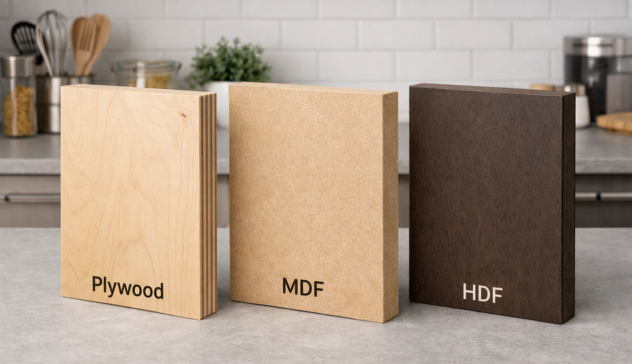
I'd say plywood is the clear winner here - it's strong, takes screws well, and doesn't mind a little bit of moisture. If you're planning a room that's going to be super humid or see a lot of heavy use, marine-grade plywood is probably your best bet.
MDF's a budget option that's got a smooth finish, which is great for painted finishes. It's not the best choice for wet zones, though, so you'll want to stick with it for upper cabinets or dry storage.
HDF (high-density fiberboard) is denser than MDF and can be a bit tougher. It still doesn’t like water, so it’s best used where moisture exposure is low.
How to Plan Kitchen Layouts for Space Optimization
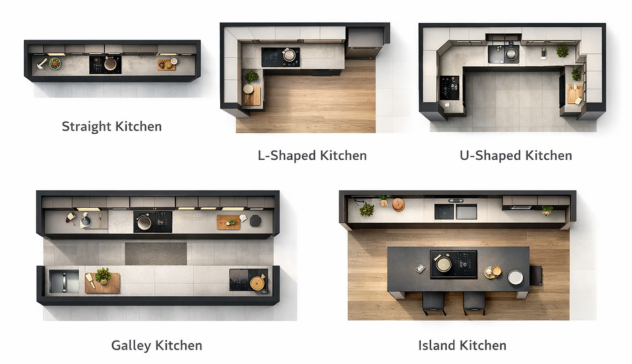
Layout's the backbone of your modular kitchen - it determines everything from your storage options to how you move through the space. And let me tell you, it makes a huge difference when it comes to how cooking feels.
A straight kitchen layout is perfect for tight spaces - everything's lined up along one wall, which makes cleaning a breeze and keeps costs down. Yes, storage can feel a little limited - but tall units, smart overhead cabinets, and a bit of creativity go a long way.
L-shaped kitchen layouts use two connected walls to create extra counter space and an open feel. They're great for small and mid-size homes - and usually work pretty well for people who cook a lot, too.
U-shaped kitchen layouts wrap around three walls, creating a work triangle between the sink, stove, and fridge. It's great for people who do a lot of cooking, but you'll want to plan it carefully to avoid making the space feel cramped.
A parallel (galley) kitchen layout's got two counters facing each other - it's super efficient, but you'll need to make sure that the walkway's wide enough for two people to pass comfortably.
Finally, island kitchen layouts add a freestanding work area - they're great in open-plan homes and add a ton of prep space and storage. Just be prepared for the cost to go up a notch and the need for a bit more space.
Integrating Built-in Appliances and Smart Kitchens
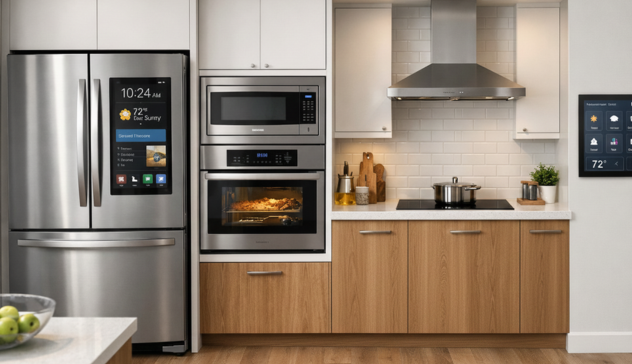
Built-in appliances are a huge win for kitchens - not just because they help keep things looking tidy, but because they help you use energy more efficiently. Smart planning means appliances run based on real usage and utility rates, which can save you a pretty penny in the long run.
Modular shelving is another great idea - it makes it easy to upgrade parts of your kitchen later on without having to rebuild the whole thing. And as for built-in units, water-resistant finishes are a lifesaver - they keep the cabinet boxes and panels safe from steam and splashes.
Sensors can take care of tasks like lighting and air control, too - so you can spend less time fiddling with things during cooking and keep conditions stable.
When it comes to ergonomics, you want to think about where each appliance goes. When the oven, sink and fridge are in the right spots, you'll end up taking fewer steps and avoiding awkward reaches. And don't even get me started on how important it is to have durable flooring in an appliance-heavy kitchen - it's got to handle weight, traffic, and spills while keeping your feet safe.
Maximizing Storage Solutions With Custom Cabinetry
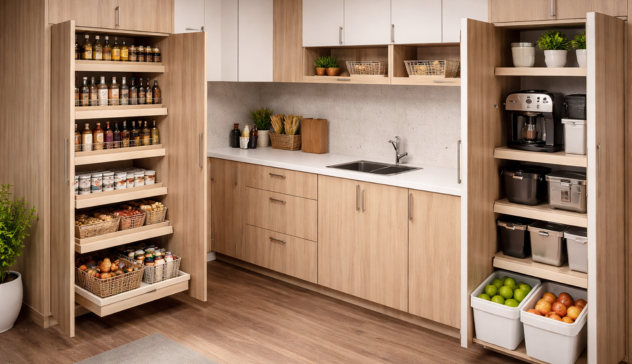
Storage's the secret to making a modular kitchen feel, well, totally in-use. And I'm not just talking about a few pull-out drawers with some soft-close hardware - I'm talking about deep drawers that can hold pots and small appliances without stacking, and adjustable shelves that let you fit in all the weird and wonderful stuff that accumulates in the kitchen.
Utility cabinets with multi-level shelves and hidden sections are another game-changer - they help keep counters clear and make your workflow feel super smooth. And don't forget about water-resistant finishes on engineered wood - they make maintenance a breeze and improve the long-term durability of your cabinets. Modularity also means you can upgrade individual parts of your kitchen over time, rather than having to do a whole remodel - which is a huge win, if you ask me. Custom cabinet heights can really make a big difference. When counters and shelves are tailored to the people using them - and not the other way around - your kitchen just feels safer, more comfy, and far easier to get around every single day.
Choosing the right modular kitchen starts with smart planning, durable materials, and layouts that match how you actually use your space. At Express Kitchens, we focus on designing modular kitchens that maximize storage, improve workflow, and balance upfront cost with long-term value. From moisture-resistant cabinetry and functional layouts to integrated appliances and space-saving storage solutions, every detail is planned for daily comfort and lasting performance. With thoughtful design and quality construction, Express Kitchens helps homeowners create modular kitchens that look great, function effortlessly, and stand up to years of real-world use.
FAQ’s
1. How do I choose the right modular kitchen layout for my home?
Choosing the right modular kitchen layout depends on your space size, cooking habits, and storage needs. Straight, L-shaped, U-shaped, galley, and island layouts each suit different workflows. Proper planning improves movement, storage access, and overall efficiency.
2. What is the best material for modular kitchen cabinets?
Plywood is considered the best material for modular kitchen cabinets due to its strength, moisture resistance, and durability. MDF and HDF are budget-friendly options for dry areas, while marine-grade plywood works best in humid environments.
3. How much does a modular kitchen cost on average?
The cost of a modular kitchen depends on layout, cabinet materials, finishes, storage accessories, and built-in appliances. Smart planning helps balance upfront costs with long-term durability, reducing future repair or replacement expenses.
4. What are the biggest mistakes to avoid when planning a modular kitchen?
Common mistakes include choosing design before layout, underestimating storage needs, ignoring ventilation, and selecting materials that are not moisture-resistant. Proper planning prevents wasted space and costly changes later.
5. Are modular kitchens suitable for small homes and apartments?
Yes, modular kitchens are ideal for small homes because they use space efficiently through tall cabinets, pull-out storage, and built-in appliances. With smart planning, even compact kitchens can feel open, organized, and functional.